Why Some Brand Partnerships Work
(And Most Don’t)
Brand collaborations are everywhere.
From limited-edition product drops to unexpected co-branded campaigns, partnerships have become one of the fastest ways for brands to generate attention, spark conversation, and tap into new audiences. In an increasingly crowded marketplace, the appeal is obvious: collaborations offer a shortcut to relevance.
But there’s a problem.
Most brand collaborations don’t fail because they’re badly executed. They fail because they never had a clear reason to exist in the first place. Two brands come together, launch something “exciting”, and hope the novelty will do the heavy lifting. Sometimes it does. But more often, the result is a partnership that feels forced, opportunistic, or culturally tone-deaf. At best, it gets a short spike in engagement. At worst, it confuses audiences and weakens both brands’ positioning.
The truth is: collaboration isn’t inherently strategic. It only becomes strategic when it is rooted in clarity.
The most successful partnerships don’t happen because a brand wants to borrow attention. They happen because there is genuine alignment, a shared purpose, and a clear value exchange for the audience. They feel additive rather than promotional. And crucially, they stay true to what each brand stands for.
That’s what separates collaborations that build long-term brand equity from those that disappear as quickly as they launch.
Collaboration is Easy. Getting It Right Isn’t.
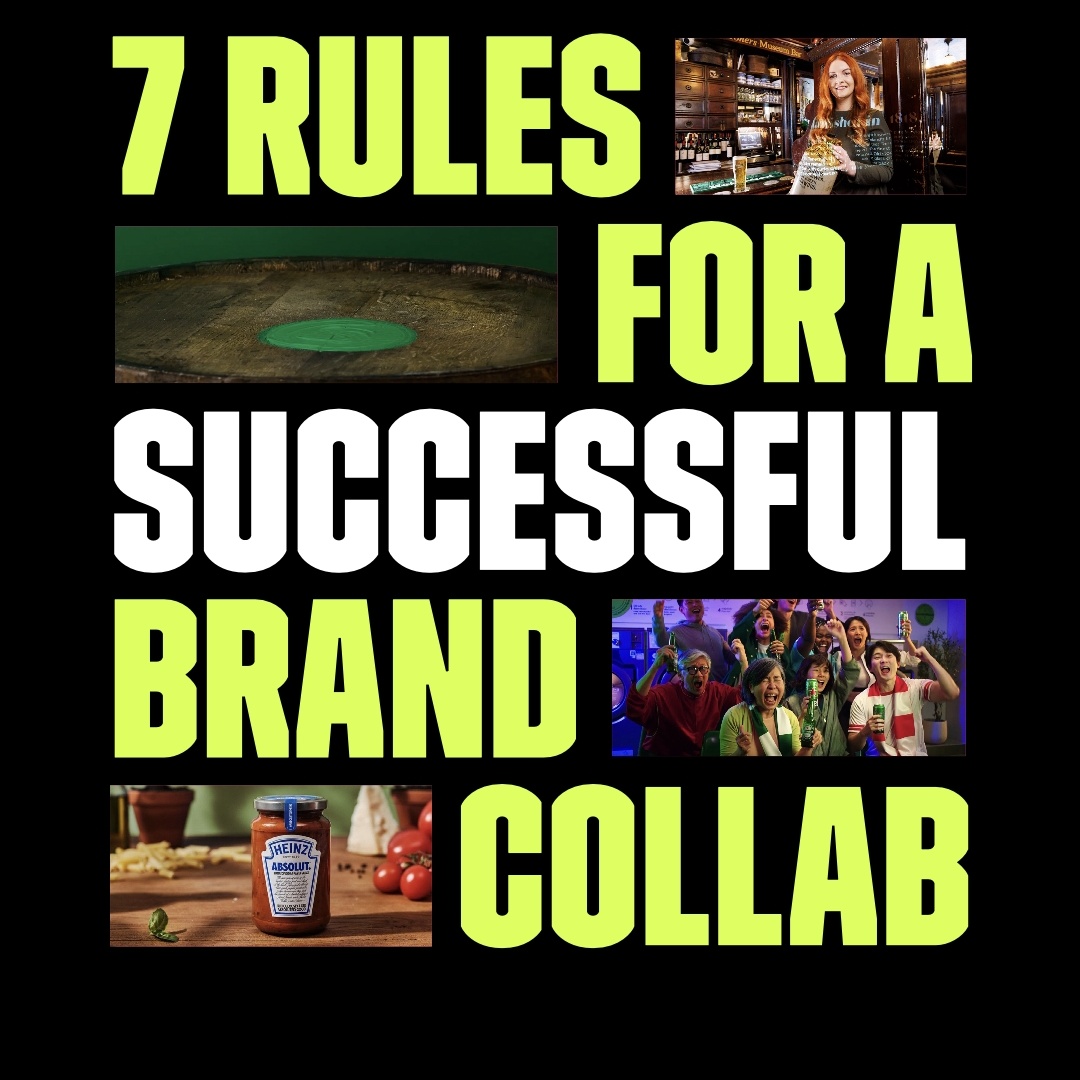
In the report, we outline:
- 7 key rules for successful brand collaborations
- Case studies from brands like Heineken, Heinz and Pantone
- A practical playbook of collaboration archetypes
The strongest collaborations are not built on convenience. They are built on clarity. If you’re considering a brand collaboration in the year ahead, this report is a useful place to start.
Download The Collaboration Effect mini report for free here.